Moving a Factory: Logistics Checklist & Wooden Packing
| Relocating an industrial workshop or production facility requires rigorous phasing to prevent operational downtime and unrecoverable equipment damage. Moving heavy plant assets is fundamentally different from commercial office shifting: sensitive calibration points, heavy drive motors, and electrical switchboards demand custom-built wooden packing to survive transit shocks, crane hoisting, and humidity exposure. |
|---|
Whether you are expanding manufacturing capacity across south Kerala or retooling an engineering shop, this comprehensive checklist walks through the key logistical stages—from inventory audits and rigging to utility decommissioning and specialized industrial packing.
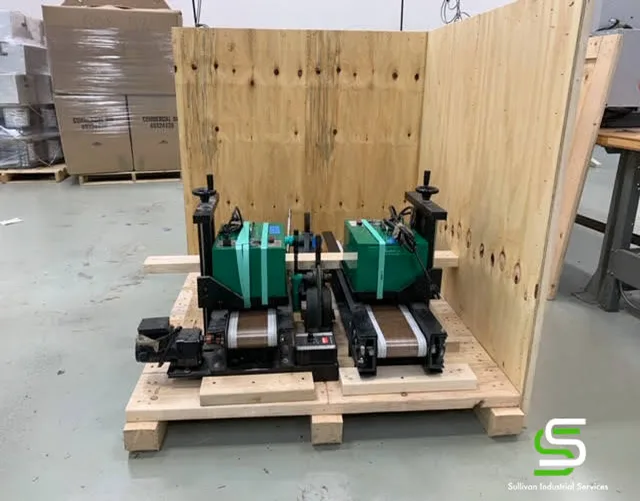
Figure 1: Custom industrial crating and machinery preparation for relocations.
Phase 1: Pre-Move Audit & Asset Classification
A successful plant move begins months before any equipment is unbolted. Every machine tool, storage rack, and raw material batch must be inventoried with its exact handling profile.
1. Categorize Machinery by Weight & Calibration Sensitivity
Group your assets into distinct handling tiers. High-precision machinery (such as CNC machining centers, EDM machines, optical inspection tables, and PCB surface-mount units) cannot simply be strapped into an open trailer. They require structural isolation and tailor-made protective packaging.
2. Obtain Technical Machine Blueprints & OEM Transit Locks
Check manufacturer manuals for factory transit clamps. Sensitive machine axes, spindle counterweights, and floating tool turrets must be mechanically locked before transit to eliminate internal bearing brinelling during haulage.
3. Blueprint New Facility Floor Layouts & Overhead Clearances
Map machinery footprints directly onto the concrete floor of the destination shop. Confirm that bay entrance doors, roller shutters, and overhead gantry cranes provide sufficient turning radius and vertical clearance for rigging rigs.
Phase 2: Utility Decommissioning & Site Preparation
Industrial machines require clean, documented shutdowns to protect sensitive electronics and meet safety compliance rules.
1. Fluid Drainage & Environmental Hazmat Handling
Evacuate all hydraulic fluids, gear oils, coolant sumps, and pneumatic lubricants prior to packing. Leaking oils will compromise timber skids, destroy tie-down friction, and violate local transit regulations governed by the Central Pollution Control Board.
2. Electrical & Pneumatic Isolation
Tag and lock out all 415V three-phase electrical connections. Ensure digital control cables, servo encoders, and pneumatic supply hoses are clearly labeled with matching terminal numbers to expedite installation at the new plant.
Phase 3: Rigging & Engineered Wooden Crating
This is the operational stage where most equipment damage occurs if standard domestic moving practices are mistakenly applied. Heavy equipment transport demands specialized skidding and timber engineering.
1. When Custom Timber Packaging Is Non-Negotiable
Any equipment with exposed ball screws, fragile control enclosures, or top-heavy weight distribution must be anchored inside a heavy-duty wooden crate. Unlike corrugated boxes or stretch wrap, structural timber absorbs heavy lateral g-forces, prevents side punctures, and provides standardized forklift pocketing.
2. Internal Load Blocking & Moisture Defense
Inside the timber frame, machinery must be bolted directly to hardwood structural skids. For coastal transit routes, line crates with heat-sealed vapor barrier foil and industrial desiccant bags to prevent corrosion.
Equipment Packaging Standards: Standard vs. Heavy Industrial
| Packaging Dimension | Standard Workshop Shift | Engineered Industrial Relocation |
|---|---|---|
| Base Support | Open commercial pallets | Hardwood structural skids with steel corner gussets |
| Enclosure Design | Cardboard wrap & bubble film | Fully sheathed or braced heavy wooden crate |
| Shock Isolation | Standard foam inserts | High-density neoprene dampening & axis locking |
| Moisture Barriers | Basic stretch wrap | Heat-sealed VCI foil bags & industrial desiccants |
| Lifting Interface | Direct slings / pallet jacks | Engineered forklift pockets & certified crane lifting lugs |
Phase 4: Transit Logistics Across South Kerala Corridors
Manufacturers moving facilities within Thiruvananthapuram and adjoining districts must contend with specialized road and environmental factors.
1. Managing High Coastal Humidity & Monsoon Rains
Between June and September, Kerala’s southwest monsoon brings sustained, torrential rainfall and air saturated with humidity. If machinery moves between industrial zones—such as from the Kochuveli Industrial Estate to the KINFRA International Apparel and Infotainment Park at Thumba—water intrusion is a severe hazard. All crating must be fully enclosed with waterproof membrane caps to protect sensitive electric motors and electronic drives.
2. Navigating Urban Infrastructure & Industrial Park Access
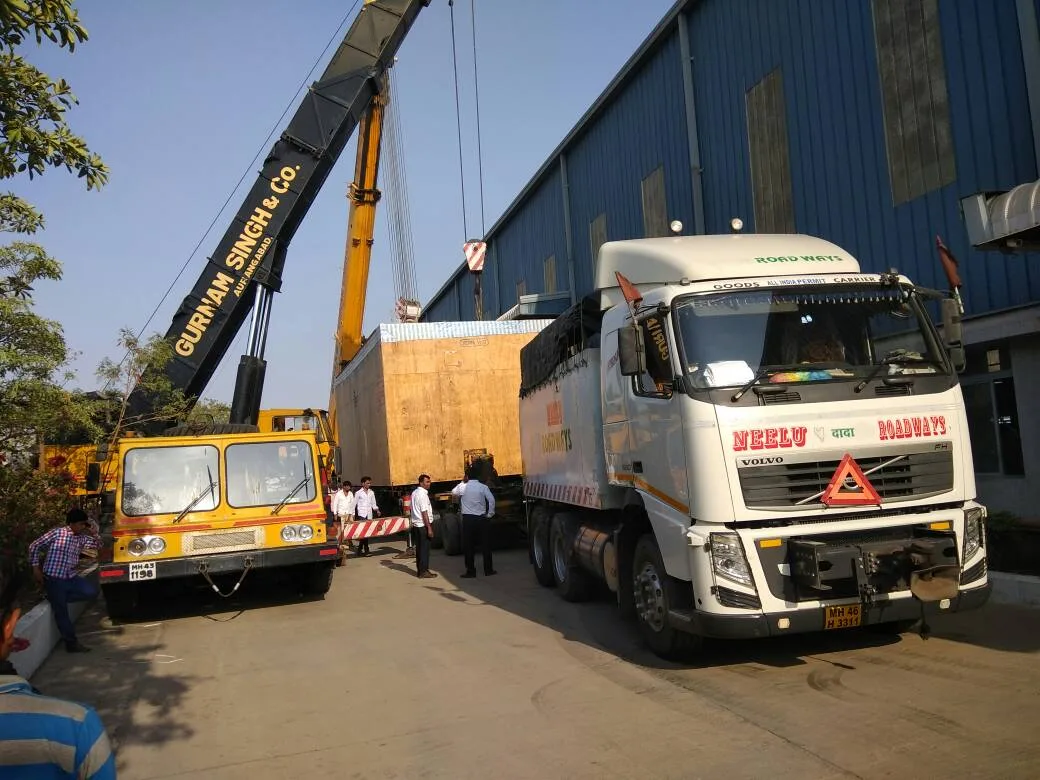
Transporting low-bed trailers carrying 20-ton payloads requires careful route planning around narrow arterial corridors, low-hanging utility lines, and heavy highway traffic along the Kazhakkoottam-Vizhinjam bypass corridor. Partnering with a proven moving company in Trivandrum ensures that crane mobilization permits, hydraulic axle trailers, and union labor clearances are arranged smoothly without project stoppages.
Figure 2: Multi-axle commercial transport carrying heavy plant machinery across Kerala industrial corridors.
Phase 5: Uncrating, Positioning, and Recommissioning
The move is not finished until machines are anchored, leveled, and produced within tolerance specifications.
1. Controlled Uncrating & Component Inspection
Inspect all shock sensors and tip-and-tell indicators before dismantling outer timber sheathing. Record any shipping damage immediately for transit insurance documentation before positioning machines onto foundations.
2. Precision Leveling & Grouting
Machine tools must be leveled using precision spirit levels or laser alignment systems before tightening anchor bolts. Uneven foundation contact creates structural frame twisting, ruining machining accuracy.
3. Staged Commissioning & Trial Runs
Staged commissioning and trial runs provide a controlled approach to restarting machinery after installation, maintenance, or shutdown. Equipment is powered up systematically, beginning with essential electrical and mechanical checks. Teams verify motor phase rotation, inspect connections, purge hydraulic lines, check lubrication, and confirm pressure levels. Safety interlocks, emergency stops, guards, sensors, and control systems are tested to ensure reliable operation. Machinery is then operated under controlled conditions while technicians monitor vibration, temperature, pressure, noise, and other critical parameters. Initial sample parts are produced and inspected against quality specifications. Once performance, safety, and product quality are confirmed, full factory shifts can resume.
| Plan Your Workshop or Plant Relocation with Industrial Rigging Specialists Industrial equipment relocation requires experienced riggers, precision load balancing, and certified packaging. When shifting machinery across Kerala, working with specialized packers and movers in Trivandrum prevents costly structural damage and production delays. Preparing for an upcoming facility expansion or plant transfer? Explore our on-site Industrial Rigging & Wooden Packing Services, or contact our Trivandrum project team to schedule a comprehensive on-site facility survey. |
|---|